

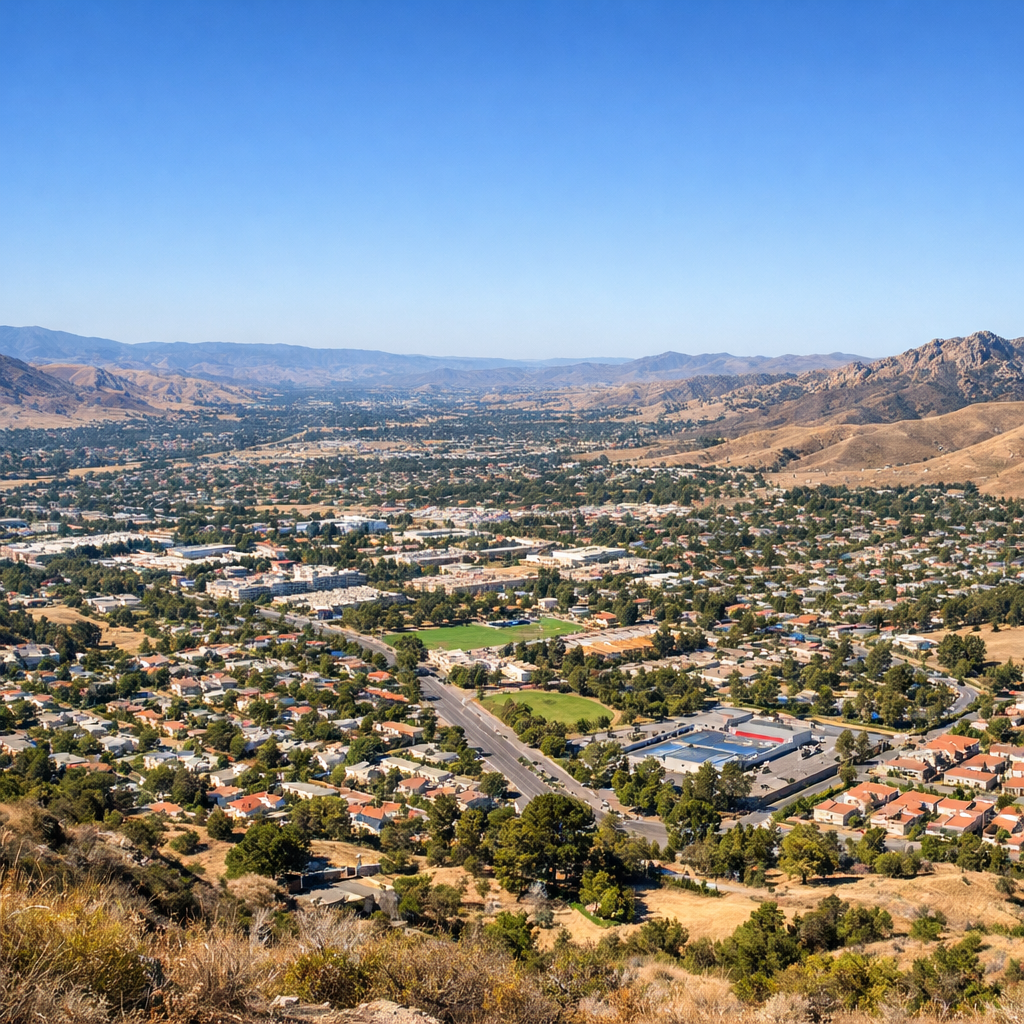
Simi Valley, nestled between the Simi Hills and Santa Susana Mountains, boasts a warm-summer Mediterranean climate characterized by hot, dry summers and mild, wet winters. This climate pattern influences local weather, seasonal changes, and environmental considerations.
Climate Overview
Throughout the year, Simi Valley experiences significant temperature variations. Summers, particularly from June to September, are typically hot and arid, with average high temperatures ranging from 82°F to 87°F. August stands out as the warmest month, averaging a high of 87°F and a low of 63°F. Winters, spanning November to March, are cooler and wetter, with average daily high temperatures below 68°F. December is the coolest month, with an average low of 46°F and a high of 65°F. Annual precipitation averages around 15.6 inches, with the majority occurring during the winter months.
Environmental Challenges
The city’s geographical setting presents certain environmental challenges. The surrounding hills and mountains are susceptible to wildfires, especially during the dry summer months. Post-wildfire conditions can lead to erosion and increase the risk of floods and mudflows during the rainy season. Recognizing these risks, Simi Valley has implemented measures to manage growth and development in areas prone to such hazards, ensuring that infrastructure and safety services are adequately maintained.
City’s Environmental Initiatives
To address environmental concerns and promote sustainability, Simi Valley’s Environmental Compliance Division oversees several key programs:
Industrial Pretreatment Program
This program ensures that businesses adhere to the city’s Sewer Use Ordinance, safeguarding the sewer system and treatment facilities from harmful discharges. Regular monitoring and inspections help maintain compliance and protect public health.
Stormwater Quality Management
Aimed at preventing stormwater pollution, this program ensures compliance with the National Pollutant Discharge Elimination System (NPDES) permit. Activities include public education, industrial inspections, and collaboration with countywide initiatives to monitor water quality.
Hazardous Materials Program
The city offers a Household Hazardous Waste Drop-Off Program for residents, facilitating the safe disposal of hazardous materials. Additionally, the program provides emergency response services and training to city employees on hazardous materials awareness.
Solid Waste Services
Dedicated to reducing landfill waste, the city emphasizes proper waste separation and recycling. Residents and businesses are encouraged to participate actively to minimize environmental impact.
Water Conservation
Implementing water conservation ordinances, the city promotes efficient water use through rebates, water-wise gardening tips, and educational resources, aiming to mitigate the effects of long-term water shortages.
By understanding Simi Valley’s unique climate and supporting these environmental programs, residents can contribute to preserving the city’s natural beauty and ensuring a sustainable future.